

Then drove out to the golf course, and to the Santa Elena Historical Site:
Saw several markers, but the trail had recent storm damage, so I missed a few:


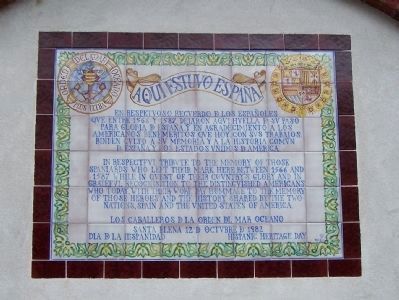
Aqui Estuvo España (Here Was Spain)
By Mike Stroud, June 26, 2009
1. Aqui Estuvo España Marker
In respectful tribute to the memory of those Spaniards who left their mark here between 1566 and 1587 while in quest of their country's glory and in grateful recognition to the distinguished Americans who today, with their work pay homage to the memory of those heroes and the history shared by the two nations, Spain and the United States of America.
Los Caballeros de la Orden del Mar Oceano Santa Elana 12 de Octubre de 1982
Dia de la Hispandid — Hispanic Heritage Day
And this one, next to it:
Northern Most Known Bastion of Spanish Florida

1. Northern Most Known Bastion of Spanish Florida Marker
For twenty years Spain's tenure was marked by varying degrees of success, marred by disintegrating relations with the Indians, who destroyed the Fort and the settlement
in 1577. The fortress was promptly replaced by Fort San Marcos, its palisades made of cedar logs brought from St. Augustine; but the settlement remained in ashes until 1580 when it was rebuilt to its former condition - - some sixty odd buildings, half of which were tabby. Partially governed by its inhabitants, it furnished what was possibly the first instance of the use of the democratic process, and of woman suffrage in the New World.
Both the Fort and the settlement were abandoned in 1587 when the inhabitants were withdrawn to St. Augustine to strengthen its defenses following Sir Francis Drake's raid of the previous year.
On way back we stopped in Port Royal for 2 NRHP sites:
 |
| The F.W. Scheper Store building |
 |
| Mt Union Church, which had a National Register plaque on it. Also stopped in at Brick Baptist Church which is part of Penn Center, and got these shots 
An old water tower
 Perhaps an old parsonage building 
Left over from yesterday, the Verdier House Downtown.

|


No comments:
Post a Comment